
Life history and social structure as drivers of persistent organic pollutant levels and stable isotopes in Hawaiian false killer whales (Pseudorca crassidens).
Science of the Total Environment. 2020.
Volume 733
More details
Collapse details
Date Published:
Publication:Ocean:Region:Species:Methods:
- September 1, 2020
False killer whales are long-lived, slow to mature, apex predators, and therefore susceptible to bioaccumulation of persistent organic pollutants (POPs). Hawaiian waters are home to three distinct populations: pelagic; Northwestern Hawaiian Islands (NWHI) insular; and main Hawaiian Islands (MHI) insular. Following a precipitous decline over recent decades, the MHI population was listed as “endangered” under the Endangered Species Act in 2012. This study assesses the risk of POP exposure to these populations by examining pollutant concentrations and ratios from blubber samples (n = 56) related to life history characteristics and MHI social clusters.
Complete
Occurrence, Distribution, and Density of Marine Mammals Near Naval Station Norfolk and Virginia Beach
Project Objectives
Assess occurrence, seasonality, and abundance of Tursiops in the coastal waters of Hampton Roads military installations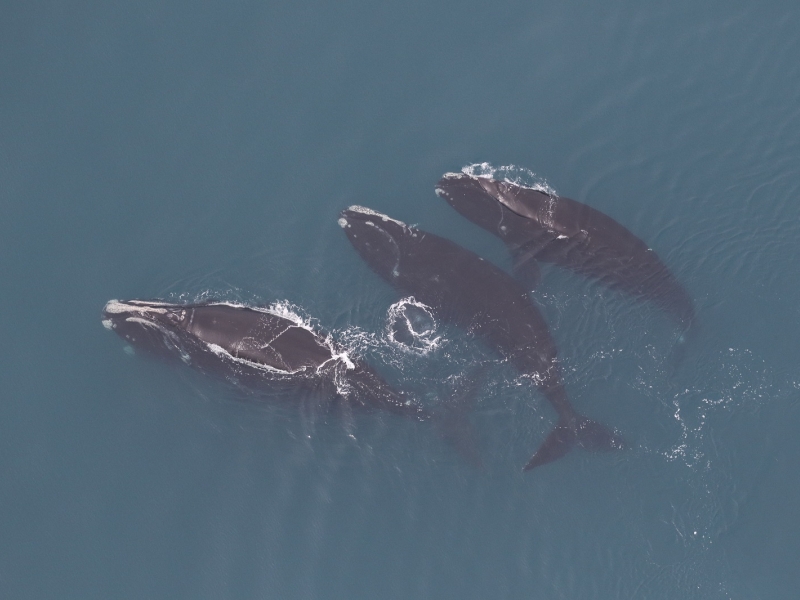
2024-2025 Large Whale Season Summary
March 24, 2025
We have two separate efforts focusing on cetaceans off the coast of Virginia. The first is our Offshore (Outer Continental Shelf) Cetacean Study, which focuses primarily on deep diving odontocetes like sperm whales. The second effort is our Nearshore and Mid-Shelf Baleen Whale Monitoring Project.
No related presentations or posters to display
